What to Expect on Day One of Physical Therapy


Coming into physical therapy for the first time can feel a little intimidating. There may be a lot of unknowns: What exactly is causing my pain? How long will recovery take? What will physical therapy actually involve? You may also simply be nervous about trying something new.
The good news is that your first day of PT is designed to answer those questions and give you a clearer picture of what is going on. While every patient and injury is different, here is a general idea of what you can expect during your first visit.
It Starts with a Conversation
Your first session will begin with a conversation with your physical therapist. This is your opportunity to explain everything that has been going on. You may discuss when your pain started, what activities make it better or worse, how the injury happened, and how your symptoms are affecting your daily life.
The more complete picture your PT has, the better they can tailor the evaluation to you. Your story helps guide the objective tests and measurements that will be performed during the rest of the session.
Pain and injuries are not always predictable. Sometimes pain comes and goes, moves to different areas, or seems to appear without a clear reason. But even when pain is unpredictable, the body often moves in predictable patterns.
Looking at How Your Body Moves
Human movement has a certain “shape.” When we walk, squat, reach, climb stairs, or perform other everyday activities, different parts of the body should work together in an efficient and coordinated way.
During your evaluation, your PT may have you perform certain movements so they can observe that overall pattern. Alterations in movement can occur because of decreased mobility in certain areas, strength deficits between muscle groups, poor postural alignment, or overcompensation by specific joints and muscles.
Many times, pain can persist because one area of the body is not moving as it should, causing another area to work overtime to compensate. As humans, we were created to move—and to move efficiently. When that pattern of efficiency is disrupted, pain and dysfunction can occur.
That is why a comprehensive physical therapy evaluation looks at the big picture rather than focusing only on the area that hurts.
Taking a Comprehensive Look
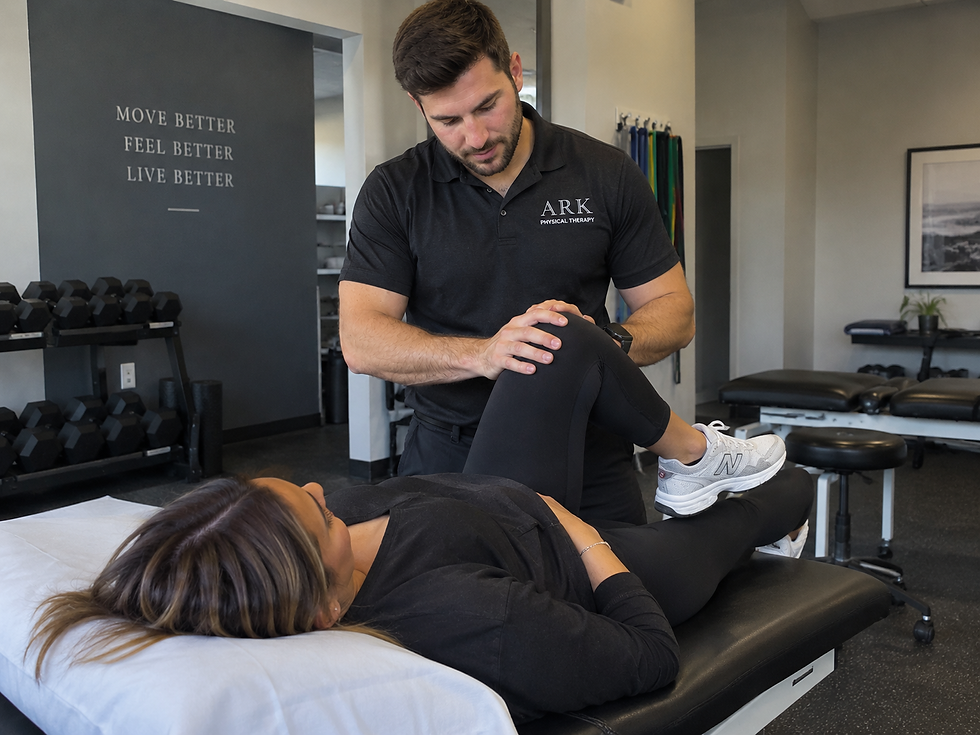
Your PT will assess your posture and observe how you perform specific movements. They will also evaluate mobility and strength in the affected area as well as surrounding areas that are closely connected.
For example, knee pain may involve more than just the knee. The hip, ankle, foot, and even the way the rest of the body moves can all influence how forces are distributed through the knee.
Your PT will then take a more in-depth look at the affected area. This may include assessing the joint, surrounding muscles, ligaments, and tendons. They will screen for signs of major injury while also looking for limitations in joint mobility, muscle flexibility, strength, and areas of increased tension that may be contributing to your symptoms.
The goal is to identify not only where you are experiencing pain, but also the movement deficits and contributing factors that may be keeping that pain around.
Understanding the Plan Moving Forward
Once the evaluation and objective testing are complete, your PT will explain what they found. You should leave with a better understanding of what may be contributing to your symptoms and what areas need to be addressed.
Your PT will also walk you through what future visits may look like and explain the plan moving forward. Rehabilitation is not a one-size-fits-all process, so your treatment plan will be based on your individual needs, goals, and the findings from your evaluation.
Starting Treatment
In many cases, treatment begins on the very first day. Depending on what was found during the evaluation, this may include hands-on techniques such as joint mobilizations or soft tissue work to address stiff joints and tight musculature.
You will also begin corrective exercises specifically selected for your individual needs. These exercises are designed to improve mobility, build strength, retrain movement patterns, and gradually prepare your body for the activities you need and want to do.
Before you leave, your PT may give you a few exercises to perform at home. Consistency is key to creating lasting change. Performing your exercise program as prescribed can help reinforce the progress made during your PT sessions and keep you moving toward your goals.
Your first day of physical therapy is ultimately about getting answers, understanding your body, and creating a plan. What may feel like an unknown when you walk through the door can become a clear path forward—one step, one movement, and one session at a time.
Learn more about treatment options at Ark Physical Therapy